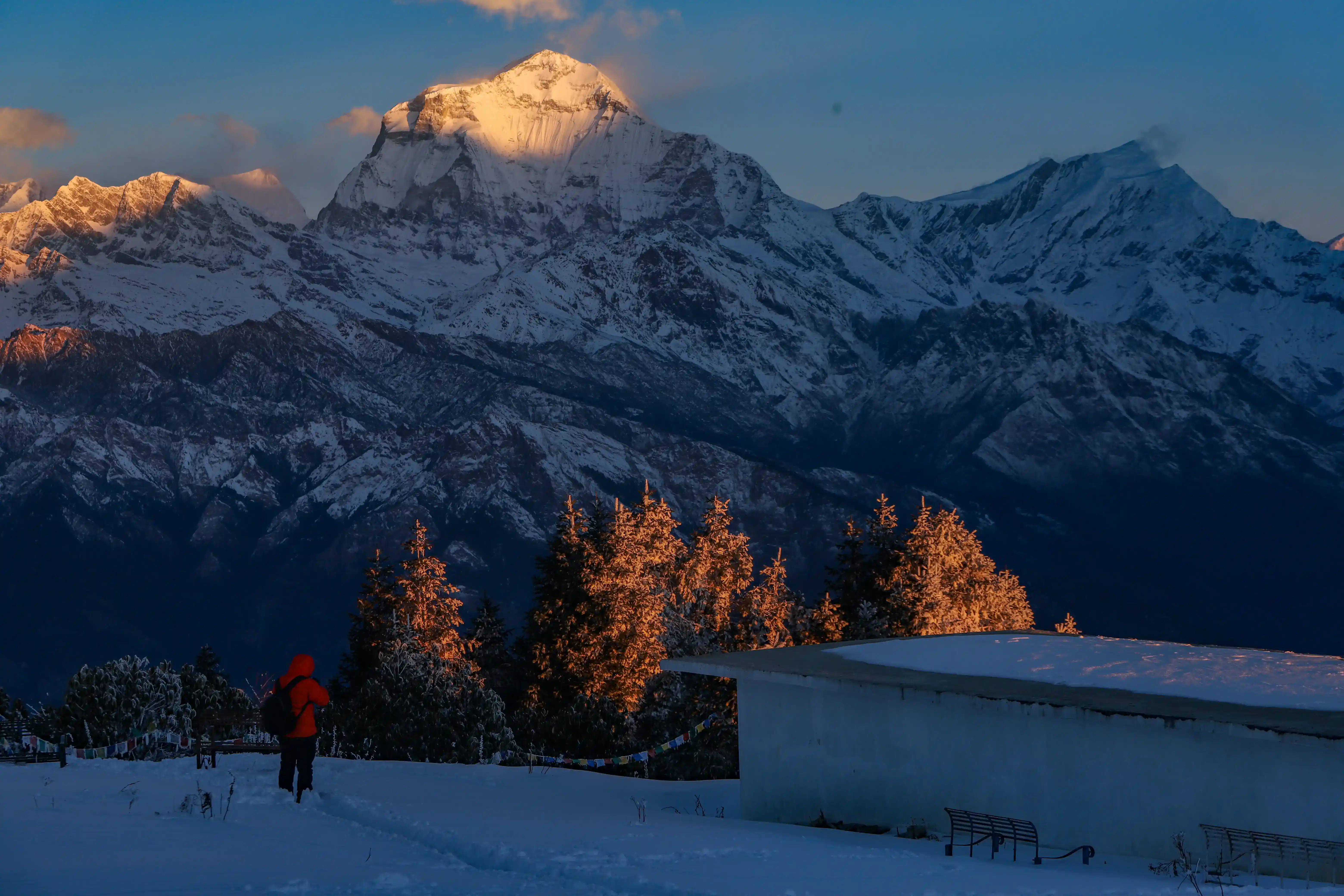
Annapurna
Annapurna Base Camp with Poon Hill Trek - 10 Days

- DestinationNepal
- RegionAnnapurna
- Duration10 Days
- TransportationFlight + Drive
- Max Height4,130 m / 13,549 ft
- ActivitiesTrekking, Cultural Immersion, Photography, Hot Springs
- Trip GradeModerate
- AccommodationTea House
- Group SizeMin. 1 Pax
- Best SeasonMar-May & Sep-Nov
- MealsB.L.D.
- Start / End PointNayapul/Kimche
Introduction
The Annapurna Base Camp with Poon Hill Trek is Nepal's most popular combined trekking route, offering the perfect blend of stunning mountain panoramas, cultural immersion, and natural diversity. This 10-day adventure takes you to the heart of the Annapurna Sanctuary at 4,130 meters, surrounded by a spectacular amphitheater of towering peaks including Annapurna I (8,091m), Machapuchare "Fishtail" (6,993m), Hiunchuli, and Annapurna South. Before reaching base camp, you'll witness the famous sunrise from Poon Hill (3,210m), one of the world's most photographed viewpoints. Trek through terraced rice paddies, rhododendron forests alive with color in spring, traditional Gurung and Magar villages, and diverse ecosystems ranging from subtropical to alpine. Perfect for trekkers wanting spectacular mountain views without extreme altitude challenges.
Annapurna Base Camp with Poon Hill Trek Highlights
- Watch spectacular sunrise over Annapurna and Dhaulagiri ranges from Poon Hill (3,210m)
- Stand in the Annapurna Sanctuary surrounded by 360-degree mountain amphitheater
- Witness the sacred Machapuchare (Fishtail Mountain) - Nepal's unclimbed peak
- Trek through blooming rhododendron forests (Nepal's national flower) in spring
- Experience authentic Gurung and Magar culture in traditional mountain villages
- Relax in natural hot springs at Jhinu Danda after the trek
- Enjoy well-established trails with comfortable teahouse infrastructure
- See dramatic landscape transitions from terraced farmlands to alpine meadows
- Perfect first high-altitude trek in Nepal - moderate difficulty with spectacular rewards
Why Book the Annapurna Base Camp with Poon Hill Trek with Us?
- Expert Annapurna region guides with 8+ years local experience
- Early morning Poon Hill sunrise coordination and timing
- Quality teahouse selection at optimal locations
- Small group sizes for personalized cultural experiences
- Flexible itinerary adaptable to weather and fitness levels
- Village homestay options for authentic cultural immersion
- Photography guidance for Poon Hill and ABC
- Hot springs access and relaxation time included
- Porter support to carry your load
- Support for local communities through responsible tourism
- 24/7 customer support during trek
Annapurna Base Camp with Poon Hill Trek Itinerary
Arrive at Tribhuvan International Airport where our team welcomes you. Option 1: Scenic 25-minute flight to Pokhara with Himalayan views (weather permitting). Option 2: Tourist bus or private vehicle drive through Nepalese countryside. Pokhara is Nepal's adventure capital set beside beautiful Phewa Lake with stunning Annapurna backdrop. Check into lakeside hotel. Evening trek briefing covering route, equipment, and cultural insights.
Early morning drive to Nayapul (1,070m), gateway to the Annapurna region. Begin trekking through terraced fields and small villages. Cross the Modi Khola river and ascend through beautiful sal forests. Pass through Tikhedhunga and climb the famous stone staircase (over 3,000 steps!) to Ulleri village. Continue through magnificent rhododendron forests to Ghorepani, a charming village meaning "horse water." Prepare for tomorrow's early Poon Hill sunrise.
Wake at 4:30 AM for the magical pre-dawn climb to Poon Hill (3,210m). Reach the summit for one of the world's most spectacular sunrises as golden light illuminates the entire Annapurna and Dhaulagiri ranges - over 40 peaks visible including Annapurna I, Dhaulagiri, Nilgiri, and Machapuchare. The 270-degree panorama is unforgettable! After sunrise photography and breakfast in Ghorepani, trek through beautiful rhododendron forests (spectacular if blooming) to Tadapani with continuous mountain views.
Descend through rhododendron and oak forests with occasional views of Annapurna South and Machapuchare. Cross the Kimrong Khola river via suspension bridge and climb steeply to Chhomrong, the last large village before entering the Annapurna Sanctuary. Chhomrong is a beautiful Gurung village built on terraced hillsides. Stunning close-up views of Machapuchare (Fishtail) and Annapurna South dominate the skyline. Rest and acclimatize.
Descend steep stone steps to Chhomrong Khola river, then climb on the opposite bank before descending into bamboo and rhododendron forests. The trail enters the Modi Khola gorge - the gateway to the Annapurna Sanctuary. Trek through dense bamboo groves (habitat for red pandas and Himalayan black bears). Pass Kuldighar and reach Bamboo village. The landscape becomes increasingly dramatic as valley walls close in.
Continue ascending through the gorge alongside the Modi Khola. Pass through Dovan and Himalaya Hotel with increasingly spectacular mountain views as the valley opens. Trek through avalanche zones (safe trail but impressive evidence of nature's power). Reach Hinku Cave, then climb to Deurali. The landscape transitions to alpine terrain with sparse vegetation. First close views of the Annapurna Sanctuary's towering walls. Temperature drops noticeably.
Today you enter the sacred Annapurna Sanctuary! Trek through the gorge as it dramatically opens into the sanctuary amphitheater - one of trekking's most magical moments. Reach Machapuchare Base Camp (3,700m) with stunning close-up views of the sacred Fishtail peak. Continue to Annapurna Base Camp surrounded by an incredible 360-degree mountain cirque: Annapurna I (8,091m - 10th highest), Annapurna South, Hiunchuli, Gangapurna, Annapurna III, and the majestic Machapuchare. Explore the area and soak in this mountain sanctuary. Sunset and night sky are spectacular.
Wake early to witness magical sunrise in the sanctuary as first light hits the towering peaks. The amphitheater glows golden - an unforgettable sight! After breakfast and final photos, begin descending. Retrace steps to Deurali and Himalaya Hotel. Continue descending rapidly (easier on lungs!) to Bamboo. The oxygen-rich lower elevation feels wonderful. Celebrate your ABC achievement!
Continue descending through forests back to Chhomrong. Instead of retracing to Nayapul, take the trail to Jhinu Danda. This scenic village is famous for its natural hot springs located at the river below. After checking into teahouse, hike down (30 minutes) to the natural hot springs and soak your tired muscles in the therapeutic mineral waters while enjoying river and forest views - the perfect reward after completing ABC!
Final trekking day descending through terraced fields and villages to Nayapul. Meet your vehicle and drive back to Pokhara. Afternoon free to explore lakeside, shop for souvenirs, get massage, or simply relax by Phewa Lake. Optional celebration dinner at lakeside restaurant with mountain views. Reflect on your incredible journey through the Annapurna region.
Why This Trek?
The Annapurna Base Camp with Poon Hill Trek offers the perfect introduction to Himalayan trekking, combining spectacular mountain scenery, rich cultural experiences, diverse ecosystems, and manageable challenges. Standing in the Annapurna Sanctuary surrounded by a 360-degree amphitheater of towering peaks is one of trekking's most magical moments - you feel embraced by the mountains. The sacred Machapuchare (Fishtail) looms overhead, Annapurna I dominates the skyline, and you realize why this is one of the world's most beloved treks. Add the spectacular Poon Hill sunrise, blooming rhododendron forests (in spring), warm Gurung hospitality, and relaxing hot springs, and you have a complete trekking experience. This trek delivers world-class mountain views without the extreme altitude, lengthy time commitment, or expensive flights of Everest region treks.
Ready to experience the magic of the Annapurna Sanctuary? Book your ABC with Poon Hill Trek today and discover why this is Nepal's most popular trek. Perfect for first-time Himalayan trekkers, families, photographers, culture enthusiasts, and anyone seeking spectacular mountain views without extreme challenges. Whether you're drawn to the dramatic amphitheater at base camp, the legendary Poon Hill sunrise, the blooming rhododendrons, or the authentic Gurung culture, this trek delivers unforgettable experiences. Join our expert local guides for this incredible 10-day journey through the heart of the Annapurna region. The mountains are calling - answer them!
Trek Difficulty
The Annapurna Base Camp with Poon Hill Trek is rated moderate, making it accessible to trekkers with reasonable fitness and determination. While not as challenging as Everest Base Camp, it still requires good physical conditioning and mental preparation. The maximum altitude (4,130m) is moderate by Himalayan standards, reducing altitude sickness risk. This trek is perfect for those wanting a substantial mountain experience without extreme altitude challenges.
Physical Fitness
Good fitness is required for 5-7 hours of daily trekking on varied terrain. The trek includes significant elevation gain and loss, particularly the stone staircase to Ulleri (3,000+ steps!) and the climbs to Poon Hill and ABC. Regular cardiovascular exercise is essential: hiking, running, cycling, or swimming 3-4 times weekly for 6-8 weeks before departure. Strengthen legs with squats, lunges, and step-ups. Practice hiking with a daypack on hills or stairs. If you can comfortably hike 6 hours with 500m elevation gain, you should manage well. Previous multi-day trekking experience is helpful but not required.
Altitude Sickness
Altitude sickness is less common on ABC trek due to the moderate maximum elevation (4,130m) and gradual ascent profile. Most people don't experience significant symptoms below 4,000m. However, everyone responds differently to altitude. Stay hydrated (3-4 liters daily), ascend gradually following the itinerary, avoid alcohol, eat well, and recognize early symptoms: headache, nausea, fatigue, dizziness. Inform your guide immediately if symptomatic. The itinerary includes natural acclimatization by climbing to Poon Hill (3,210m) before pushing higher to ABC. Altitude medication (Diamox) is usually not necessary but consult your doctor.
Preparation
Begin training 6-8 weeks before departure. Focus on: 1) Cardiovascular endurance - regular hiking, running, or cycling, 2) Leg strength - squats, lunges, step training, 3) Practice hikes with a weighted daypack (6-8kg), 4) Stair climbing (excellent preparation for Ulleri!), 5) Core strengthening for balance on uneven trails. Break in your trekking boots thoroughly (100+ km). Mental preparation is also important - research the route, visualize success, prepare for basic accommodation. Consider a practice overnight hike if possible. Get a basic medical checkup, especially if over 50 or with pre-existing conditions.
Cost & Budgeting
Budget overview
The Annapurna Base Camp with Poon Hill Trek is one of Nepal's most affordable mountain treks, typically costing $600 to $1,500 per person depending on group size, service level, and personal expenses. The Annapurna region has excellent infrastructure, competitive pricing, and no expensive flights required.
Estimated cost breakdown
Saving tips
Take tourist bus instead of flight to Pokhara (saves $100+ but adds 6 hours). Join group treks to share guide and porter costs. Trek in shoulder season (March or November) for negotiable prices. Bring your own sleeping bag (rental $2/day adds up). Order Dal Bhat meals (cheaper with unlimited refills). Carry water purification tablets instead of buying bottled water. Book directly with local Pokhara operators. Stay in Pokhara guesthouses rather than lakeside hotels. The Annapurna region is very budget-friendly - independent trekking is feasible but guides add significant value.
Best Time to Trek
The Annapurna Base Camp with Poon Hill Trek can be done year-round but is best during autumn (September to November) and spring (March to May). The Annapurna region receives more rain than Everest region but has excellent infrastructure that operates year-round.
Spring
Spring (March to May) is spectacular, especially late March through April when rhododendron forests are in full bloom - entire hillsides covered in red, pink, and white flowers. The national flower of Nepal puts on an incredible show! March can still have some snow at ABC (adds beauty). April offers the best combination of warm weather, clear skies, and blooming flowers. May gets warmer and afternoon clouds increase. Daytime temperatures: 15-20°C at lower elevations, 5-10°C at ABC. Perfect for photography and nature lovers.
Autumn
Autumn (September to November) is the most popular season with crystal-clear skies, stable weather, and comfortable temperatures. September can still have monsoon moisture, but October and November offer the best visibility. October is busiest but deservedly so - nearly perfect conditions. November is cooler but still excellent. Daytime temperatures: 10-18°C at lower elevations, 0-8°C at ABC. Nights are cold (-5 to -10°C at ABC). Best for mountain views and photography.
Monsoon
Monsoon (June to August) brings daily afternoon rain, leeches below 3,000m, and frequent cloud cover obscuring mountain views. However, the Annapurna region remains trekable with proper rain gear and flexibility. Advantages: empty trails, discounted prices, lush green landscapes, wildflowers. The sanctuary can be misty and mysterious. Morning hours often clear. Only recommended for experienced trekkers who don't mind rain and can be flexible with viewing goals. Landslides possible on access roads.
Winter
Winter (December to February) is cold but feasible. Snow possible above 3,500m, especially at ABC. Daytime temperatures: 8-15°C at lower elevations, -5 to 5°C at ABC. Night temperatures drop to -10 to -20°C at base camp. Crystal clear skies offer spectacular visibility - some of the year's best mountain views! Trails nearly empty. Teahouses remain open. Good sleeping bag (-15°C) and warm clothing essential. Perfect for those seeking solitude who don't mind cold. January/February are coldest.
Weather in the Annapurna region is generally more variable than Everest due to lower elevation and monsoonal influence. Spring and autumn see morning clear skies with afternoon clouds developing. Rain showers possible even in dry seasons. ABC sits in a sanctuary bowl that creates its own microclimate - clouds often form in afternoons. Temperature variations are significant between day and night, especially at altitude. Always pack layers and rain gear regardless of season.
Choose spring (March-April) for blooming rhododendrons, warming weather, and beautiful photography - ideal for nature lovers. Choose autumn (October-November) for the clearest, most stable weather and best mountain views - ideal for serious photographers and viewpoint seekers. Avoid monsoon unless you're flexible and don't mind rain. Winter offers solitude and clear skies if you handle cold well. October is most popular but March-April runs a close second. Both seasons offer excellent trekking.
Permits & Regulations
Overview
The Annapurna Base Camp Trek requires two permits: the Annapurna Conservation Area Permit (ACAP) and the Trekkers' Information Management System (TIMS) card. These are simpler and cheaper than Everest permits.
Annapurna Conservation Area Permit (ACAP)
Required for entry into the Annapurna Conservation Area, Nepal's largest protected area established in 1986. The ACAP covers 7,629 square kilometers including the entire ABC trek route. Permit fees support conservation programs, sustainable tourism development, community projects, trail maintenance, and protection of biodiversity including endangered species like snow leopard, red panda, and musk deer. Cost: NPR 3,000 (approximately $30 USD) for foreigners, NPR 1,000 for SAARC nationals.
Trekkers' Information Management System (TIMS) Card
TIMS card helps ensure trekker safety by maintaining a database of trekkers in the region. Useful for rescue coordination in emergencies. Funds support tourism infrastructure. Cost varies: NPR 2,000 ($20) for independent trekkers (FIT), NPR 1,000 ($10) for organized group treks. You must specify whether trekking independently or with agency/guide.
How to obtain
ACAP and TIMS can be obtained in Kathmandu at the Nepal Tourism Board office or in Pokhara at the Tourism Board office or ACAP office (near lakeside - more convenient). Required documents: passport, 2 passport photos, and trekking itinerary. Most trekking agencies arrange permits as part of their package (highly recommended for convenience - saves you queuing time). If arranging independently, go to Pokhara Tourism Board office (30 minutes from lakeside). Keep permits accessible as checkpoints verify them multiple times - particularly at Ghandruk, Chhomrong, and sanctuary entry. Digital copies on phone are useful backups.
Accommodation & Food
Overview
Accommodation on the ABC with Poon Hill Trek consists of comfortable teahouses (lodges) with varying levels of facilities. The Annapurna region has Nepal's best-developed teahouse infrastructure with high standards and competitive pricing. From basic mountain lodges to surprisingly comfortable mid-route options.
Teahouses
Teahouses provide twin-bedded rooms with mattresses, pillows, and blankets (quality varies). Lower elevation teahouses (Ghorepani, Tadapani, Chhomrong) offer better facilities: attached or shared western toilets, hot showers ($2-3), charging stations ($1-3/hour), WiFi ($2-4/day), dining areas with stoves. Higher up (Deurali, MBC, ABC), facilities are more basic: shared squat toilets, no showers or limited hot water, basic charging, unreliable WiFi. ABC teahouses are simple but adequate. Rooms unheated but dining areas have stoves. Bring sleeping bag for warmth and hygiene (or rent in Pokhara $2/day). Jhinu Danda has comfortable lodges near hot springs.
Food
Food quality is excellent throughout the Annapurna region with diverse menus. Standard offerings: Dal Bhat (rice and lentils - unlimited refills, best value and nutrition), noodle soups (thukpa), fried rice, momos, pasta, pizza (lower elevations), Tibetan bread, eggs, porridge, pancakes, muesli. International cuisine available at lower elevations. Fresh vegetables common. Apple pie is famous in this region! Food prices increase moderately with altitude but remain reasonable. Dal Bhat: $5-8 depending on location. Menu variety decreases at ABC. Vegetarian food excellent. Many organic ingredients from local farms.
Order Dal Bhat for unlimited refills and best nutrition (essential calories for trekking). Stay hydrated with 3-4 liters daily - ginger tea and hot lemon excellent. Garlic soup is warming and helps with altitude. Try local specialties like Gurung bread. Eat where you sleep (some teahouses require this). Support local economy by buying from teahouses rather than carrying all food. Vegetarian meals are fresher at altitude. Avoid excessive meat above 3,000m. Budget $20-30 per day for food. Dining areas are social hubs perfect for meeting other trekkers. ABC teahouse dining area has a cozy mountain atmosphere with stunning views through windows.
Packing List
Essential gear
Clothing
Base layer thermals (2 sets), fleece mid-layer, down or synthetic insulated jacket, waterproof rain jacket (essential!), waterproof pants, trekking pants (2), quick-dry trekking shirts (3), warm hat, sun hat, gloves (warm pair), light gloves, scarf/buff, extra underwear and socks
Footwear
Waterproof trekking boots (broken in thoroughly!), camp shoes/sandals (for teahouses and hot springs), trekking socks (5-6 pairs - wool or synthetic blend), sock liners (optional)
Gear
Sleeping bag (0°C to -10°C rating depending on season), daypack (30-40L), trekking poles (highly recommended for Ulleri stairs and descents!), headlamp with extra batteries, sunglasses, water bottles (2L total), water purification tablets or filter, stuff sacks for organization
Personal Items
Sunscreen SPF 40+, lip balm with SPF, basic first-aid kit, pain relievers, blister prevention (Compeed), personal medications, hand sanitizer, wet wipes, toilet paper, quick-dry towel, toiletries, insect repellent (for lower elevations)
Electronics & Documents
Camera/smartphone with extra batteries, power bank (10,000+ mAh), phone, universal adapter, headphones, passport with copies, permits, travel insurance documents, cash (USD and NPR), credit card (backup)
Optional
Swimsuit (for hot springs!), book or Kindle, journal and pen, playing cards, lightweight binoculars, small towel for hot springs, thermos for hot drinks, gaiters (winter/monsoon), portable solar charger, extra camera memory cards, notebook for cultural observations, small gifts for homestay families or children
What not to pack
Heavy jeans or cotton clothing, excessive clothes (laundry available), hair dryer, expensive jewelry, laptop (unless essential), hardcover books (bring e-reader), non-essential toiletries, too many electronics, single-use plastics, fresh food from Kathmandu (available on trail), items "just in case." The Annapurna region has excellent infrastructure - you can buy forgotten items in Pokhara or even on trail. Pack light - you'll enjoy the trek more!
Guides & Support
Benefits of a guide
While the ABC with Poon Hill Trek can be done independently (trails are well-marked, English widely spoken), hiring a local guide significantly enhances the experience. Benefits include: cultural interpretation and language translation (especially in Gurung villages), best teahouse recommendations and room availability assistance, timing Poon Hill and ABC sunrise perfectly, identifying mountain peaks and sharing local stories, safety support and altitude monitoring, meal ordering help and dietary communication, navigation through villages and junctions, emergency assistance and coordination, supporting local economy directly. Guides transform the trek from just walking to cultural immersion.
How to choose
For ABC with Poon Hill, choose guides with: government certification (mandatory license), local origin from Annapurna region (Gurung or Magar ethnic guides offer deepest cultural insights), 5+ years guiding experience on this route, good English communication, basic first-aid training, knowledge of teahouse quality and availability, friendly personality (you'll spend 8 days together!), excellent references from previous clients. Book through reputable agencies that pay fair wages and provide guide insurance. Pokhara-based agencies often have excellent local guides. Ask about their group size preferences (smaller better), emergency protocols, and whether they speak your language. Many guides are also great photographers and can help with photos!