Annapurna
Khopra Ridge Trek - 9 Days

- DestinationNepal
- RegionAnnapurna
- Duration9 Days
- TransportationDrive
- Max Height4,660 m / 15,288 ft
- ActivitiesTrekking, Cultural Immersion, Wildlife Viewing, Photography
- Trip GradeModerate to Strenuous
- AccommodationCommunity Lodge & Tea House
- Group SizeMin. 1 Pax
- Best SeasonMar-May & Sep-Nov
- MealsB.L.D.
- Start / End PointKimche or Nayapul
Introduction
The Khopra Ridge Trek, also known as Khopra Danda Trek, is the perfect off-the-beaten-path alternative to the crowded Poon Hill and Annapurna Base Camp routes. This spectacular 9-day journey takes you to the remote Khopra Ridge (3,660m), where you'll experience dramatic close-up views of Annapurna South, Nilgiri, Dhaulagiri, and the sacred Annapurna I from a stunning community lodge perched on a high ridge. Trek through pristine rhododendron forests, traditional Magar villages, and rarely-visited valleys while enjoying the solitude that's increasingly rare in the Annapurna region. Optional side trip to sacred Khayer Lake (4,660m) offers an adventurous high-altitude experience. With community-managed lodges supporting local development, sustainable tourism practices, and spectacular mountain panoramas without the crowds, Khopra Ridge is becoming the trek of choice for discerning trekkers seeking authentic Himalayan experiences.
Khopra Ridge Trek Highlights
- Experience spectacular ridge-top views from Khopra community lodge (3,660m)
- Trek the uncrowded alternative to Poon Hill with far fewer tourists
- Optional challenging excursion to sacred Khayer Lake (4,660m) - stunning alpine lake
- Close-up views of Annapurna South, Nilgiri, Dhaulagiri, and Annapurna Fang
- Support sustainable community tourism - lodges managed by local villages
- Trek through pristine rhododendron forests (spectacular in spring bloom)
- Experience authentic Magar culture in traditional villages
- Finish with relaxing natural hot springs at Tatopani
- Higher chance of wildlife sightings including Himalayan Thar and birds
Why Book the Khopra Ridge Trek with Us?
- Expert Khopra Ridge specialist guides with extensive regional knowledge
- Small groups ensuring personalized attention and flexibility
- Community lodge booking coordination (limited beds, advance booking essential)
- Khayer Lake excursion guidance and safety support
- Cultural immersion in Magar villages with homestay options
- Wildlife identification expertise (birds, mammals, plants)
- Sustainable tourism practices supporting local communities
- Flexible itinerary adaptable to weather and fitness
- Photography guidance for ridge viewpoint shots
- Environmental responsibility and Leave No Trace principles
- 24/7 support throughout your trek
Khopra Ridge Trek Itinerary
Early morning drive from Pokhara through terraced farmlands to Kimche village (1,780m). Begin trekking immediately with a steady uphill climb through cultivated terraces and small Gurung settlements. The trail ascends through beautiful oak and rhododendron forests with occasional mountain views. Reach Tadapani, situated on a ridge with stunning views of Annapurna South, Hiunchuli, and Machapuchare. This traditional trekking stop has good teahouse facilities. Rest and acclimatize for the journey ahead.
Leave the main Poon Hill-Annapurna circuit and head into less-traveled territory! Trail descends initially through dense rhododendron forests before climbing to Isharu village (2,550m), a remote Magar settlement. Continue ascending through forest and pastures with increasingly spectacular mountain views. Reach Bayeli Kharka (Upper Chistibung), a high pasture area with just 2-3 basic lodges. The remoteness begins here - far fewer trekkers. Mountain views become more dramatic as you gain elevation. Prepare for spectacular sunrise tomorrow.
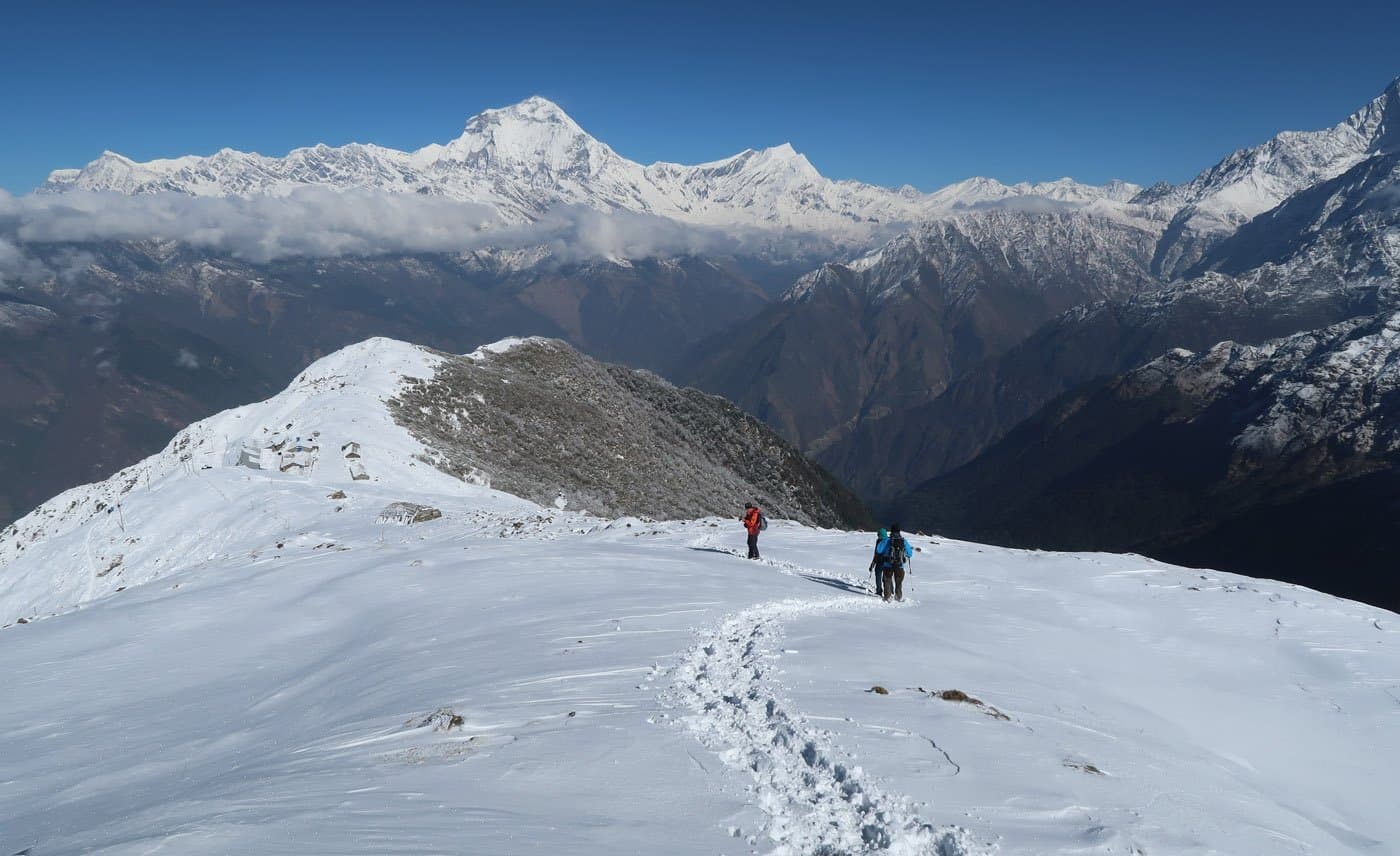
Shorter but spectacular day! Trek through alpine meadows and yak pastures with stunning mountain views throughout. The trail gradually ascends a spectacular high ridge. Reach Khopra Ridge (Khopra Danda) and the impressive community lodge - your home for 2 nights. This special lodge was built and is managed by local communities as a sustainable tourism initiative. The location is absolutely breathtaking - perched on a high ridge with 360-degree panoramic views of Annapurna South, Nilgiri, Dhaulagiri massif (7th highest), Annapurna Fang, and dozens of other peaks. Explore the ridge and enjoy sunset. Prepare for tomorrow's challenging Khayer Lake excursion (if weather permits and you're feeling strong).
Optional challenging excursion to sacred Khayer Lake (Khayar Lake), a pristine alpine glacial lake at 4,660m beneath the towering south face of Annapurna South. Early start (5-6 AM) required for this demanding but incredibly rewarding day. Steep climb gaining 1,000m through alpine terrain and rocky paths. The sacred lake, revered by both Hindus and Buddhists, sits in a spectacular glacial cirque with turquoise waters reflecting Annapurna South and Fang. The setting is absolutely surreal - few trekkers make it here. Return to Khopra by afternoon. Alternative: Rest day at Khopra Ridge exploring the area, photographing mountains, interacting with lodge staff, or simply enjoying the spectacular setting. Not everyone is fit enough for Khayer Lake after days of trekking - listen to your body.
Bid farewell to spectacular Khopra Ridge and begin descending through different landscapes. Trail descends steeply at first through rhododendron forests and pastures. Pass through small shepherd settlements and yak grazing areas. Reach Swanta village, a traditional Magar community where you can experience authentic village life. Some groups arrange homestays here for cultural immersion (sleeping in village homes, eating with families, learning about daily life). If not homestaying, comfortable teahouse available. Evening cultural interaction with villagers.
Trek through beautiful forests rejoining the main Poon Hill circuit. Pass through small villages and cultivated terraces. Gradual ascent brings you back to Ghorepani, the bustling village on the main trekking route. The difference in tourist traffic is immediately noticeable after days in quiet areas! Ghorepani has excellent facilities, many teahouses, bakeries, and mountain views. Prepare for optional Poon Hill sunrise tomorrow if you have energy and desire (though after Khopra Ridge, some trekkers skip Poon Hill).
Optional early morning climb to Poon Hill (3,210m) for the famous sunrise view over Annapurna and Dhaulagiri ranges - though after experiencing Khopra Ridge, this may feel less essential! After sunrise (or sleeping in), descend through forests and villages. Long descent through Ulleri village and down the famous stone staircase (easier going down!). Continue to Tikhedhunga and further descend to Tatopani, meaning "hot water" in Nepali. This riverside village is famous for natural hot springs fed by underground thermal sources. Soak your tired muscles in the therapeutic hot pools - the perfect reward after a week of trekking!
Final trekking day following the Kali Gandaki river valley through villages and terraced fields. Relatively easy, flat trail along the valley. Pass through small settlements observing daily rural life. Reach Nayapul where your vehicle awaits. Drive back to Pokhara arriving by afternoon. Check into lakeside hotel. Celebrate completing the fantastic Khopra Ridge Trek with hot shower, massage, and lakeside dinner. Reflect on the spectacular ridge views, sacred Khayer Lake (if you went), authentic village experiences, and the satisfaction of choosing the road less traveled.
After breakfast, option to return to Kathmandu via flight or tourist bus, or extend your time exploring beautiful Pokhara and its attractions: Phewa Lake boating, International Mountain Museum, Davis Falls, Peace Pagoda, paragliding (if adventurous!). Take home wonderful memories of the uncrowded Khopra Ridge Trek.
Why This Trek?
The Khopra Ridge Trek represents everything that makes Himalayan trekking special: spectacular mountain panoramas from a dramatic high ridge, authentic cultural experiences in traditional Magar villages, pristine forests alive with rhododendrons and wildlife, the adventure of optional high-altitude challenges at Khayer Lake, and most importantly - the solitude and uncrowded trails that are increasingly rare in Nepal's mountains. Standing at Khopra Community Lodge watching sunrise illuminate Annapurna South, Nilgiri, and Dhaulagiri while surrounded by just a handful of fellow adventurers rather than hundreds - this is the Himalayan experience trekkers dream about. The community-managed lodge adds meaningful purpose, knowing your journey directly supports village development and sustainable tourism. Whether you push yourself to sacred Khayer Lake or simply enjoy the spectacular ridge, celebrate with hot springs in Tatopani, and immerse in Magar culture, Khopra delivers authentic Himalayan adventure.
Ready to experience the Annapurna region away from the crowds? Book your Khopra Ridge Trek today and discover Nepal's best-kept secret. Perfect for trekkers seeking authentic experiences, spectacular mountain views without tourist masses, optional high-altitude challenges, and meaningful sustainable tourism. Choose the road less traveled and discover why discerning adventurers are making Khopra Ridge their preferred Annapurna trek. Our expert guides know this route intimately, coordinate community lodge bookings, and ensure safe Khayer Lake excursions. Join the adventure - the ridge awaits!
Trek Difficulty
The Khopra Ridge Trek is rated moderate to strenuous. While not as challenging as high passes treks, it's definitely harder than Poon Hill or standard Ghorepani treks. The optional Khayer Lake excursion is strenuous, reaching 4,660m with significant elevation gain. This trek requires good fitness, previous multi-day hiking experience recommended, and proper preparation.
Physical Fitness
Good to excellent fitness is required. Daily trekking of 5-7 hours on varied terrain including steep ascents and descents. The trail is less developed than main routes - rougher, rockier, with some exposed sections. Khayer Lake day (if attempted) is particularly demanding: 8-10 hours round trip gaining 1,000m to 4,660m altitude. Recommended preparation: 2-3 months of regular cardio training (hiking, running, cycling) 4 times weekly, strength training focusing on legs and core, practice hikes with elevation gain carrying daypack (8-10kg), stair climbing for endurance. Previous multi-day trekking experience is beneficial. You should be comfortable hiking 6-7 hours carrying a daypack before attempting this trek.
Altitude Sickness
Altitude risk is moderate. Maximum sleeping altitude is 3,660m at Khopra (similar to Namche Bazaar on EBC route), which most people handle well with proper acclimatization. However, the Khayer Lake excursion reaches 4,660m - a significant jump that can cause altitude symptoms if not properly prepared. The itinerary includes gradual ascent helping natural acclimatization. Essential precautions: stay hydrated (3-4 liters daily), ascend slowly, recognize AMS symptoms (headache, nausea, dizziness, fatigue), inform guide immediately if symptomatic. The Khayer Lake day should only be attempted if you feel well at Khopra - don't push if you have any altitude symptoms. Most people experience no issues, but preparation and awareness are crucial.
Preparation
Start training 8-12 weeks before departure. Focus on: 1) Cardiovascular endurance - progressively longer hikes or runs, build to 6-8 hour hiking days, 2) Leg and core strength - squats, lunges, deadlifts, planks, 3) Practice hikes with weighted pack on steep terrain, 4) Altitude awareness research - understand symptoms and prevention, 5) Mental preparation - this trek involves some basic lodges and remote sections. Break in boots thoroughly (150+ km). Consider a practice multi-day trek. Get medical checkup. If planning Khayer Lake excursion, ensure you're in excellent shape - this single day is quite demanding. Consider trekking poles for knee protection on descents.
Cost & Budgeting
Budget overview
The Khopra Ridge Trek costs approximately $600 to $1,200 per person depending on group size, service level, and whether you stay in community lodges or homestays. Prices are similar to other Annapurna treks but community lodge stays cost slightly more (supporting local development).
Estimated cost breakdown
Saving tips
Join group treks to share costs (saves 30-40%). Trek in shoulder season for negotiable prices. Bring your own sleeping bag (rental adds up). Order Dal Bhat meals (cheaper, unlimited refills). Carry water purification instead of buying bottled water. Book directly with Pokhara operators. However, remember that community lodges charge fair prices to support village development - don't over-negotiate here. The slightly higher costs directly benefit local communities. Consider skipping Khayer Lake excursion if budget-tight (saves energy and time). Choose homestay options in villages - cheaper and more cultural.
Best Time to Trek
The Khopra Ridge Trek is best during spring (March-May) and autumn (September-November) when weather is stable and mountain views are clear. The Khayer Lake excursion requires good weather and is best attempted in these optimal seasons.
Spring
Spring (March to May) is spectacular for Khopra Ridge, especially late March through April when rhododendron forests are in full bloom - the ridge approaches through forests of blooming flowers are magical. March can still have snow at higher elevations adding beauty. April and May offer warm weather and stable conditions for the Khayer Lake excursion. May can get warmer at lower elevations but is excellent at altitude. Daytime temperatures: 12-20°C at mid-elevations, 5-12°C at Khopra Ridge, 0-5°C at Khayer Lake. Spring offers the best combination of blooming nature and clear skies.
Autumn
Autumn (September to November) provides the clearest skies, most stable weather, and best mountain visibility. October is peak season with crystal-clear views - ideal for photography. Early November is colder but still excellent with fewer crowds. The ridge and lake views are absolutely spectacular in autumn's crisp air. Daytime temperatures: 10-18°C at mid-elevations, 3-10°C at Khopra Ridge, -2 to 5°C at Khayer Lake. Night temperatures drop significantly (-5 to -10°C at Khopra). October is the best single month for this trek. Khayer Lake is most accessible in October.
Monsoon
Monsoon (June to August) is challenging. Daily rain, leeches, and obscured views are main concerns. However, the off-the-beaten-path nature means even fewer trekkers - true solitude. Advantages: lush landscapes, wildflowers, discounted prices, empty trails. Disadvantages: muddy/slippery trails, Khayer Lake excursion not recommended (dangerous in rain/cloud), limited mountain views. Only for experienced, flexible trekkers with good rain gear. Landslides possible. Community lodges remain open.
Winter
Winter (December to February) is cold with snow possible above 3,000m. Khopra Ridge will likely have snow (beautiful but cold!). Khayer Lake excursion very difficult or impossible due to deep snow and extreme cold. However, crystal-clear skies offer spectacular views. Trails nearly empty. Teahouses remain open. Requires good cold-weather gear (-15°C sleeping bag, down clothing). Perfect for experienced winter trekkers seeking solitude. January/February coldest. Not recommended for Khayer Lake attempt.
Weather on the ridge is more variable than valley treks due to exposed location. Mornings typically clear with afternoon clouds developing. Strong winds possible on the ridge. Khayer Lake area creates its own microclimate with rapid weather changes. Always carry layers and rain gear. Temperature variations between sun and shade are extreme at altitude. The Khayer Lake excursion should only be attempted in clear, stable conditions - your guide will make weather-based decisions.
Choose spring (April) for blooming rhododendrons and comfortable temperatures - best for nature lovers. Choose autumn (October) for absolute clearest views and best Khayer Lake conditions - ideal for serious trekkers and photographers. November is excellent with fewer crowds. Avoid monsoon unless very flexible. Winter only for experienced cold-weather trekkers. October and April are optimal months. Always check weather forecasts before the Khayer Lake excursion day.
Permits & Regulations
Overview
The Khopra Ridge Trek requires the same permits as other Annapurna treks: ACAP and TIMS. The entire route lies within Annapurna Conservation Area.
Annapurna Conservation Area Permit (ACAP)
Required for entry into Annapurna Conservation Area. The Khopra Ridge and Khayer Lake region are within this protected area. Permits support conservation of forests (rhododendron, oak), wildlife protection (including red panda, Himalayan thar, snow leopard), sustainable tourism development, and community projects. The community lodge at Khopra is part of ACAP's sustainable tourism initiative. Cost: NPR 3,000 (approximately $30 USD) for foreigners, NPR 1,000 for SAARC nationals.
Trekkers' Information Management System (TIMS) Card
TIMS maintains database of trekkers for safety and rescue coordination. Especially important for less-traveled routes like Khopra where fewer trekkers means rescue coordination is more critical. Funds support trekker safety programs and infrastructure. Cost: NPR 2,000 ($20) for independent trekkers, NPR 1,000 ($10) for organized group treks.
How to obtain
Obtain permits in Pokhara at Nepal Tourism Board office or ACAP office (both near lakeside). Required: passport, 2 photos, itinerary. Processing: 15-30 minutes. Most agencies arrange permits as part of packages (recommended). Keep permits accessible - checkpoints at Kimche, Swanta, and other villages verify them. Community lodges may also request permit verification. Digital copies on phone useful as backup.
Accommodation & Food
Overview
Accommodation on the Khopra Ridge Trek varies from comfortable teahouses on main routes to basic lodges in remote areas, with the highlight being the community-managed lodge at Khopra Ridge. The accommodations are part of the trek's authentic, off-the-beaten-path character.
Teahouses
Accommodation varies significantly by location: Main route villages (Tadapani, Ghorepani) have comfortable teahouses with good facilities: hot showers, western toilets, WiFi, charging. Remote areas (Bayeli Kharka) have very basic lodges: simple rooms, shared squat toilets, no showers, limited electricity, basic dining areas. Khopra Ridge Community Lodge is special: built and managed by 6 local communities as sustainable tourism project, simple but adequate rooms (twin beds, mattresses, blankets), basic shared bathrooms, excellent solar-powered dining hall, stunning location, proceeds support village development. Bring sleeping bag (-10°C minimum) essential for warmth and hygiene especially at Khopra. Homestay options available in Swanta village - sleep in village homes, culturally authentic.
Food
Food quality generally good with standard trekking menus: Dal Bhat (unlimited refills - best value), noodle soups, fried rice, momos, pasta, Tibetan bread, eggs, porridge. Menu variety decreases in remote areas. Khopra Community Lodge has good food prepared by local staff (profits support communities). Fresh vegetables available. Prices reasonable throughout. At community lodges, eating supports sustainable development - feel good about every meal! Homestay meals in Swanta showcase authentic Magar cuisine. Food is simpler in remote sections but always adequate and nutritious.
Order Dal Bhat for nutrition and supporting locals (unlimited refills). Stay well-hydrated - 3-4 liters daily especially for Khayer Lake attempt. At community lodges, consider leaving extra tips/donations - funds go directly to village development projects (schools, infrastructure). Try local specialties in Magar villages. Bring high-energy snacks from Pokhara for Khayer Lake day. Budget $20-30 per day for food. Evening meals at Khopra community lodge with mountain views through windows are special - great for meeting other trekkers choosing the road less traveled.
Packing List
Essential gear
Clothing
Thermal base layers (2-3 sets), fleece mid-layers, down jacket (-15°C rated for Khayer Lake), waterproof shell jacket (essential!), waterproof pants, trekking pants (2), warm insulated pants (for Khayer Lake), warm hat, sun hat, balaclava (for lake), liner gloves, warm gloves, waterproof mittens (for lake), buff/scarf (2)
Footwear
High-quality waterproof trekking boots (broken in thoroughly), gaiters (useful for Khayer Lake), camp shoes/sandals, warm trekking socks (6 pairs), sock liners
Gear
Sleeping bag (-10°C to -15°C rating - essential!), daypack (30-40L), trekking poles (essential for Khayer Lake!), headlamp with extra batteries, high-quality sunglasses (UV400), water bottles (2-3L for Khayer Lake day), water purification tablets or filter, stuff sacks
Personal Items
Sunscreen SPF 50+ (higher altitude!), lip balm SPF 30+, comprehensive first-aid kit, altitude sickness medication (Diamox for Khayer Lake), pain relievers, blister treatment, personal medications, hand sanitizer, wet wipes, toilet paper, quick-dry towel, toiletries
Electronics & Documents
Camera with extra batteries and memory cards, power bank (15,000+ mAh - limited charging at Khopra), phone, universal adapter, headphones, passport with copies, permits, travel insurance, cash (USD and NPR - no ATMs after Pokhara), credit card
Optional
Book/Kindle for evenings at Khopra, journal, playing cards, binoculars (great for wildlife - Himalayan thar!), thermos for hot drinks at Khayer Lake, gaiters, portable solar charger (useful at Khopra), extra camera batteries (cold drains batteries fast), crampons (winter/early spring for Khayer Lake), ice axe (winter Khayer Lake), GPS device, small gifts for community lodges (donation)
What not to pack
Excessive clothes (limited laundry), heavy items, cotton clothing, laptop, expensive jewelry, too many electronics, hardcover books, non-essential toiletries, single-use plastics (environmental concern), items you can't carry. Remember: Khayer Lake day requires carrying everything yourself (guides carry emergency equipment). Pack smart and light. The more remote nature means you want a lighter pack.
Guides & Support
Benefits of a guide
A guide is STRONGLY RECOMMENDED for the Khopra Ridge Trek - more so than busier routes. Benefits include: navigation in less-traveled areas where trails can be unclear, booking Khopra Community Lodge (limited beds, advance booking essential), Khayer Lake route finding and safety (trail not always clear, weather assessment crucial), cultural interpretation in Magar villages and homestays, wildlife identification (birds, mammals, plants), emergency support in remote areas, language assistance, altitude assessment for Khayer Lake attempt, knowledge of community lodge system and etiquette. Guides familiar with this route enhance safety and cultural experience significantly.
How to choose
Choose guides with: experience specifically on Khopra Ridge route (not all Annapurna guides know this newer trail), knowledge of Khayer Lake conditions and route (crucial for safety), government certification, wilderness first-aid training, good English communication, understanding of community tourism model, cultural sensitivity (working with Magar communities), strong fitness (must be able to guide Khayer Lake excursion), excellent references for this specific route. Book through agencies specializing in off-the-beaten-path treks. Local Magar guides offer deepest cultural insights. Verify guide has done Khayer Lake multiple times - it's challenging and requires experience.