Annapurna
Poon Hill Trek - 5 Days

- DestinationNepal
- RegionAnnapurna
- Duration5 Days
- TransportationPrivate Vehicle
- Max Height3,210 m / 10,531 ft
- ActivitiesTrekking
- Trip GradeEasy to Moderate
- AccommodationTea House
- Group SizeMin. 1 Pax
- Best SeasonSep-Nov & Mar-May
- MealsB.L.D.
- Start / End PointNayapul
Introduction
The Poon Hill Trek is Nepal's most popular short trek, perfect for beginners, families, and travelers with limited time. In just 5 days, you'll experience spectacular sunrise views from Poon Hill (3,210m), walk through blooming rhododendron forests, and immerse yourself in authentic Gurung culture. This trek offers the perfect introduction to Himalayan trekking without the extreme altitude or duration of longer routes. Watch the sun paint Annapurna (8,091m), Dhaulagiri (8,167m), Machapuchare (6,993m), and dozens of other peaks in shades of gold and pink from one of the world's most famous viewpoints. The Poon Hill trek combines stunning mountain panoramas, comfortable teahouse accommodation, well-maintained trails, and rich cultural experiences in traditional Gurung and Magar villages. With a maximum altitude of just 3,210m and daily walking times of 4-6 hours, this trek is achievable for anyone with moderate fitness. The spring rhododendron blooms transform the forests into a riot of red, pink, and white colors, while autumn offers crystal-clear mountain views. Whether you're testing your trekking legs before a longer adventure, seeking a family-friendly Himalayan experience, or simply short on time but big on mountain dreams, the Poon Hill trek delivers unforgettable memories in a compact, accessible package.
Poon Hill Trek Highlights
- Watch a spectacular sunrise over 20+ Himalayan peaks from famous Poon Hill viewpoint
- See Annapurna, Dhaulagiri, Machapuchare, Nilgiri, and Manaslu ranges in one panorama
- Trek through enchanting rhododendron forests (blooming March-April)
- Experience authentic Gurung and Magar culture in traditional mountain villages
- Perfect beginner trek - no extreme altitude or technical difficulty
- Well-established teahouse trail with excellent facilities and food
- Close proximity to Pokhara - easy access and logistics
- Suitable for families with older children and seniors with good fitness
- Combine with Annapurna Base Camp trek for extended adventure
Why Book the Poon Hill Trek with Us?
- Expert local Gurung guides born and raised in the region
- 100% Guaranteed Departures - book with confidence
- Small Groups or Private Treks - personalized experience
- Comprehensive Pre-Trek Briefing in Pokhara
- 24/7 Customer Support throughout your trek
- Private Transportation included (Pokhara-Nayapul-Pokhara)
- Quality Equipment available - sleeping bags and poles
- Flexible Itinerary - can be customized to 4 or 6 days
- Family-Friendly Service with experience guiding children
- Best Value Pricing with transparent costs
Poon Hill Trek Itinerary
Arrive in Pokhara by flight from Kathmandu (25 minutes) or tourist bus (6-7 hours). Our team will meet you and transfer to your lakeside hotel. Take a relaxing stroll along Phewa Lake and enjoy the mountain views if weather is clear. In the evening, attend a trek briefing where we'll discuss the route, what to pack, and answer all your questions. Check and rent any equipment needed (sleeping bag, trekking poles, down jacket). Rest well as you'll start trekking tomorrow. Optional activities: visit the International Mountain Museum, rent bikes to explore Pokhara, or enjoy a lakeside dinner.
After breakfast, enjoy a scenic 1.5-hour drive from Pokhara to Nayapul (1,070m), passing through terraced rice fields and traditional villages. The trek begins at Nayapul with a gentle walk along the Modi Khola river on a well-paved stone trail. Cross suspension bridges decorated with colorful prayer flags. Pass through Birethanti village (1,025m) where you'll register at the ACAP checkpoint with your permits. Continue along the riverside trail through small settlements, seeing locals working in terraced fields. The trail gradually ascends through Hile and Sudame villages before reaching Tikhedhunga (1,540m). This pleasant village sits beside a cascading stream with comfortable teahouses. Today's trek is relatively easy, allowing you to adjust to walking with a backpack. Enjoy your first mountain dinner and rest early for tomorrow's climb.
Today is the most challenging day as you climb the famous stone staircase from Tikhedhunga to Ulleri village (2,070m) - approximately 3,300 steep steps! Don't rush - take your time, hydrate frequently, and enjoy the increasingly good views as you gain altitude. Local porters often pass carrying incredible loads, a reminder of mountain life's hardships. From Ulleri, the trail continues through beautiful rhododendron, oak, and pine forests. The gradient becomes gentler and more enjoyable. In spring (March-April), the rhododendron forests explode with blooms of red, pink, and white - absolutely spectacular! Pass through small settlements of Banthanti (2,210m) and Nangethanti (2,460m) where you can stop for tea breaks. The forest becomes denser and more mystical, with moss-covered trees and occasional glimpses of mountains through the canopy. Finally reach Ghorepani (2,874m), meaning "horse water" in Nepali - a historic stop on the trans-Himalayan trade route. This large settlement has numerous teahouses, shops, and stunning mountain views. Rest well as you'll wake very early tomorrow for the Poon Hill sunrise hike.
Wake up at 4:30 AM (yes, it's early but absolutely worth it!) and climb 45 minutes to Poon Hill summit (3,210m) in the pre-dawn darkness with your headlamp. You'll join dozens of other trekkers on the stone steps, all eager for the sunrise. As you reach the summit, find a good spot on the viewing platform. Watch as the first rays of sun illuminate the Himalayan giants: Dhaulagiri (8,167m) to the west, the Annapurna massif (including Annapurna I at 8,091m, Annapurna South, and Annapurna III) to the north, the distinctive pyramid of Machapuchare (6,993m), Nilgiri, Tukuche Peak, and dozens more peaks stretching across 150 degrees of horizon. The mountains turn from dark silhouettes to pink, then orange, then brilliant gold as the sun rises - it's one of the most spectacular mountain panoramas on Earth. The 360-degree view includes the Pokhara valley far below. Take lots of photos and simply absorb this magical moment. Descend back to Ghorepani for a hearty breakfast around 7-8 AM. Then you have two route options: (A) Trek to Tadapani (2,630m) - 5-6 hours through magnificent rhododendron forests with occasional mountain views. This route is quieter and very scenic. (B) Trek to Ghandruk (1,940m) - 6-7 hours via Tadapani with more descent. Ghandruk is the largest Gurung village in the region with rich culture. Both options are excellent - discuss with your guide based on your energy level and interests.
Your final trekking day! The route varies based on where you slept: From Tadapani: Descend through beautiful forests to Ghandruk (1-2 hours). Explore this fascinating Gurung village - visit the Gurung Museum to learn about the culture and history of these legendary Gurkha soldiers. Walk through the village seeing traditional stone houses, prayer wheels, and locals in traditional dress. Then continue descending on stone-paved trails through terraced fields to Kimche and finally Nayapul (4-5 hours total). From Ghandruk: Descend directly through terraced farmland and villages to Kimche and Nayapul (4-5 hours). The descent takes you past working farms where you'll see locals tending buffalo, planting rice, or harvesting vegetables depending on season. The trail is mostly downhill - easy on your lungs but can be hard on knees, so take it steady and use trekking poles. Arrive at Nayapul where your driver will be waiting. Drive back to Pokhara (1.5 hours) and check into your hotel. Enjoy a hot shower, charge your devices, and celebrate your successful Poon Hill trek! Evening free to explore Pokhara's lakeside area, enjoy a nice dinner at a restaurant, or treat yourself to a massage. Optional activities: book a morning paragliding flight for tomorrow, arrange a boat ride on Phewa Lake, or simply relax and enjoy your accomplishment.
After breakfast, transfer to Pokhara airport for your flight to Kathmandu or onward destination. If you have extra time in Pokhara, there are many activities: paragliding over the Pokhara valley with mountain views, visiting the World Peace Pagoda, boating on Phewa Lake to Tal Barahi temple, mountain biking around Phewa Lake, visiting Devi's Falls and Gupteshwor Cave, or simply relaxing in lakeside cafes. Your Poon Hill trek adventure concludes, but the memories of that magical sunrise will stay with you forever. Safe travels!
Why This Trek?
The Poon Hill Trek is the perfect introduction to Himalayan trekking, offering maximum rewards with minimum altitude risk and duration. In just 5 days, you'll experience one of the world's most spectacular mountain sunrise panoramas, walk through enchanting rhododendron forests, immerse yourself in authentic Gurung culture, and achieve a meaningful trekking accomplishment. The magic of standing on Poon Hill at dawn, watching the sun illuminate 20+ peaks over 7,000 meters including Annapurna and Dhaulagiri, is a memory that will stay with you forever. This trek proves you don't need weeks of time or extreme altitude to experience the grandeur of the Himalayas. The well-developed teahouse system, comfortable facilities, manageable daily distances, and low altitude make this trek accessible to a wide range of people - from families with children to seniors, from first-time trekkers to experienced mountaineers seeking a shorter adventure. The combination of natural beauty, cultural richness, and achievable challenge creates a perfect balance. Whether you're building confidence for longer treks, traveling with limited time, introducing your family to mountain adventures, or simply seeking a beautiful short trek, Poon Hill delivers beyond expectations. The sunrise from Poon Hill isn't just a view - it's a transformative moment that reminds us of nature's majesty and our place within it.
Ready to witness one of the world's most spectacular mountain sunrises? Book your Poon Hill Trek today and experience the magic of the Himalayas in just 5 days! Our expert local Gurung guides, carefully designed itinerary, comprehensive support services, and guaranteed departures ensure your comfort, safety, and unforgettable memories. Perfect for beginners, families, and anyone seeking a short but spectacular Himalayan adventure. Contact us now for special group discounts, custom itineraries, and instant confirmation. Limited spaces available during peak rhododendron season (April) and best weather months (October-November) - secure your spot today for the adventure of a lifetime!
Trek Difficulty
The Poon Hill Trek is classified as easy to moderate difficulty, making it one of the most accessible Himalayan treks. The maximum altitude of 3,210m is low enough that altitude sickness is very rare. The trek is perfect for beginners, families with children aged 10+, and older trekkers with reasonable fitness. While there are some steep sections (particularly the Tikhedhunga to Ulleri climb), the daily walking times are manageable at 4-6 hours, and the trail is well-maintained throughout.
Physical Fitness
A moderate level of fitness is sufficient for the Poon Hill trek. You should be comfortable walking 4-6 hours per day for consecutive days with a light daypack. The most challenging section is the 3,300-step stone staircase from Tikhedhunga to Ulleri on Day 3, which takes 2-3 hours. However, you can take as many breaks as needed - there's no rush. Recommended preparation includes: regular walking or hiking 2-3 times per week for at least a month before departure, stair climbing or step machine workouts to prepare for the Ulleri steps, basic cardio fitness (ability to walk continuously for 1-2 hours), and leg strengthening exercises like squats and lunges. If you can comfortably hike for 4-5 hours with some uphill sections, you're ready for Poon Hill. This trek is achievable for people of all ages with reasonable fitness - we regularly guide trekkers from age 8 to 75!
Altitude Sickness
Altitude sickness is extremely rare on the Poon Hill trek due to the moderate maximum altitude of 3,210m. Most people don't experience any altitude-related issues at this height. However, it's still important to understand the basics: drink plenty of water (3 liters per day), ascend gradually (which the itinerary ensures), avoid alcohol for the first 2-3 days, eat regular meals even if appetite decreases slightly, and be aware of mild symptoms like slight headache or tiredness (normal at any altitude). If you do experience headache, it usually resolves with rest, hydration, and painkillers. The Poon Hill summit is only visited briefly for sunrise (30-45 minutes) before descending, minimizing any altitude exposure. This trek is perfect for first-time high-altitude trekkers who want to experience mountain trekking without significant altitude risk.
Preparation
Preparation for the Poon Hill trek is straightforward and doesn't require intensive training. Start your preparation 4-6 weeks before departure: Go for regular walks or hikes 2-3 times per week, gradually increasing duration. Practice climbing stairs or use a step machine to prepare for the Ulleri section. If possible, do a practice hike of 4-5 hours with the daypack you'll use on the trek. Break in your trekking boots thoroughly - wear them on all your practice hikes to prevent blisters. Mental preparation is important too: research the trek route, read other trekkers' blogs, and set realistic expectations. The Poon Hill trek is more about enjoying the journey and scenery than physical challenge. Watch YouTube videos of the Poon Hill sunrise to build excitement! Unlike higher altitude treks, no special altitude acclimatization preparation is needed. Just arrive in good spirits, with reasonable fitness, and ready to enjoy the mountains.
Cost & Budgeting
Budget overview
The Poon Hill Trek is one of Nepal's most affordable treks, with total costs typically ranging from $300 to $800 per person for the complete 5-day experience. The actual cost depends on your choices regarding guides, porters, accommodation standards, food preferences, and transportation. The short duration and close proximity to Pokhara keep costs low compared to longer, more remote treks.
Estimated cost breakdown
Saving tips
Trek during shoulder seasons (early March or late November) for slightly lower prices and fewer crowds. Join a group trek to share guide and porter costs - solo trekkers pay more. Pack your own snacks, energy bars, and trail mix from Pokhara (much cheaper than buying on trail). Bring a water purification system (tablets or filter) instead of buying bottled water - saves money and reduces plastic waste. Stay at basic teahouses rather than more expensive lodges - all offer similar experiences. Eat dal bhat (Nepali rice and lentils) which often comes with unlimited refills - best value and most nutritious option. Skip unnecessary luxuries like hot showers every day (you're only trekking 4 days!). Bring a good book or cards instead of paying for WiFi. Negotiate teahouse prices politely in off-season. Book directly with Pokhara-based agencies rather than Kathmandu operators or international agencies. Travel with friends to split transportation and guide costs. The Poon Hill trek is already very affordable, but smart choices can reduce costs by 30-40%.
Best Time to Trek
The Poon Hill Trek can be done year-round, but the best times are autumn (September to November) and spring (March to May). These seasons offer the most reliable weather, clearest mountain views, and the most comfortable temperatures. The trek is lower altitude than most Nepal treks, making it more accessible in shoulder seasons.
Spring
Spring (March to May) is the most spectacular time for Poon Hill trekking, especially for nature lovers. March and April bring the famous rhododendron blooms - the forests transform into a riot of red, pink, and white flowers. Walking through blooming rhododendron forests is truly magical and unique to spring. Temperatures are warming: daytime at lower elevations 15-25°C (59-77°F), at Ghorepani 10-15°C (50-59°F), and at Poon Hill summit around 5-10°C (41-50°F) at sunrise. Nights are cool but not freezing: 5-10°C (41-50°F) at Ghorepani. Visibility is generally excellent in March and early April, though late April and May can have afternoon clouds and occasional pre-monsoon haze. May is warmer but views may be less clear. Spring sees moderate crowds - busy but not overcrowded like autumn. The villages are lively with spring activities. Baby animals are often seen. Spring is ideal if you want to see rhododendrons in bloom, prefer warmer temperatures, and don't mind some afternoon clouds.
Autumn
Autumn (September to November) is the most popular trekking season and offers the most reliable conditions for Poon Hill. The monsoon has cleared the air, providing crystal-clear mountain views - the best visibility of the year. Skies are typically deep blue with minimal clouds, especially in October and November. Temperatures are comfortable: daytime at lower elevations 15-20°C (59-68°F), at Ghorepani 8-15°C (46-59°F), and at Poon Hill summit around 0-5°C (32-41°F) at sunrise. Nights are cold: 0-5°C (32-41°F) at Ghorepani in September, dropping to -5 to 0°C (23-32°F) in November. October is the peak month with the best weather but also the most crowds - teahouses fill up early and trails are busy. November offers similarly excellent weather with fewer people and colder nights. September is also good but can have residual monsoon moisture. The landscape is lush and green from monsoon rains. Autumn is ideal if you prioritize the clearest mountain views, most stable weather, and don't mind crowds.
Monsoon
Monsoon season (June to August) is the most challenging time for the Poon Hill trek but still possible with the right expectations. Daily afternoon rain is virtually guaranteed, making trails muddy and slippery. Mountain views are frequently obscured by clouds - you may not see the peaks clearly, and Poon Hill sunrise can be disappointing if cloudy. Leeches are very common in the forests, requiring leech socks. Humidity is high and it feels muggy. However, monsoon trekking has some advantages: very few other trekkers (you may have teahouses to yourself), lush green valleys and blooming wildflowers, dramatic waterfalls, significantly lower prices, and available accommodation everywhere. Mornings are often clear before afternoon clouds build. If you trek during monsoon: bring excellent rain gear (jacket and pants), pack waterproof bags for all your gear, wear leech socks or apply leech-repellent salt, have a very flexible schedule, and accept that Poon Hill views may be limited. Monsoon is best for experienced trekkers who enjoy rain, want solitude, and aren't primarily focused on mountain views.
Winter
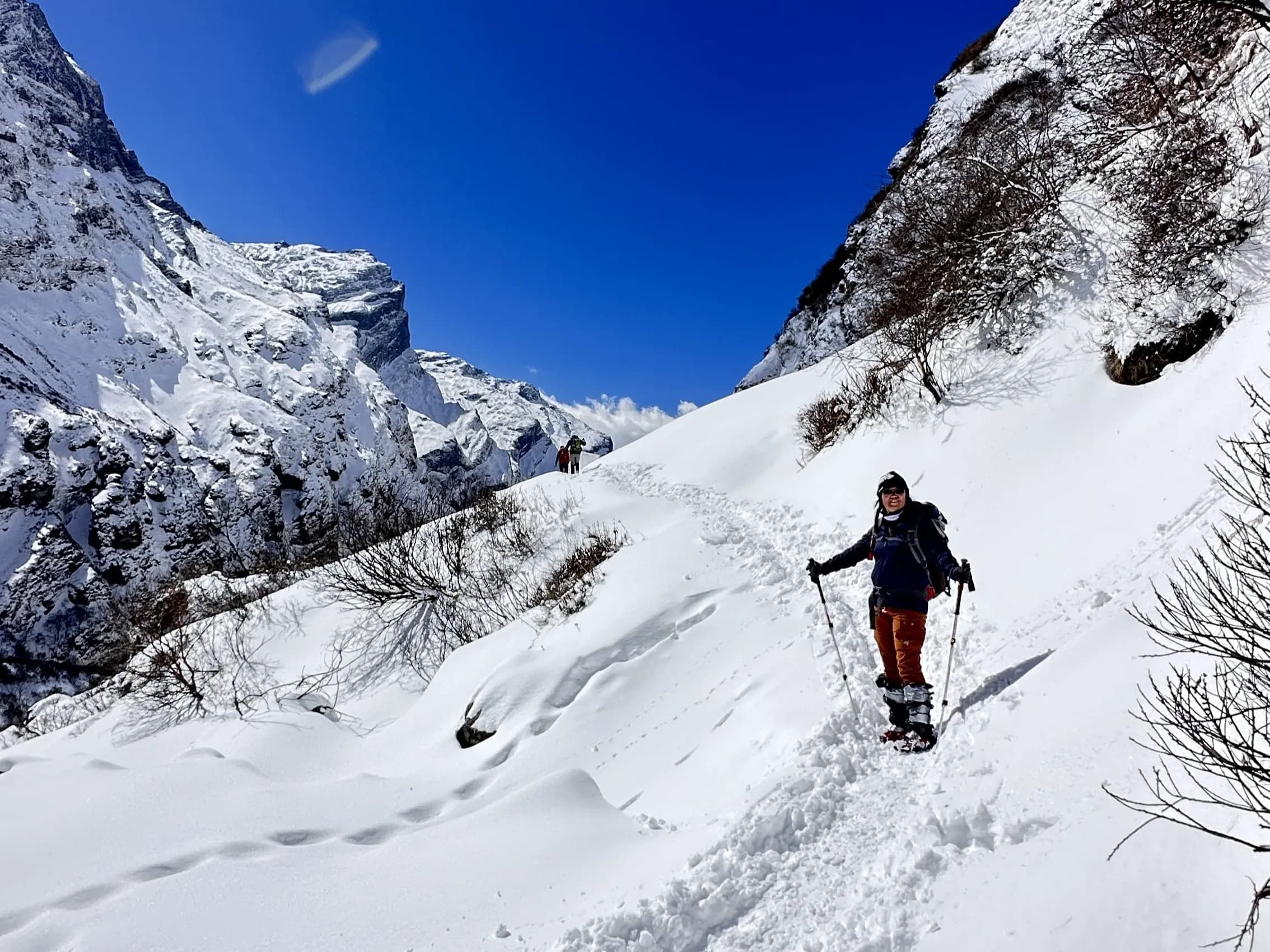
Winter (December to February) offers unique experiences but requires preparation for cold. Days are generally clear and sunny with excellent mountain views - often as good as autumn. However, temperatures are significantly colder: daytime at lower elevations 10-15°C (50-59°F), at Ghorepani 3-8°C (37-46°F), and at Poon Hill summit -5 to 0°C (23-32°F) at sunrise. Nights are very cold: -5 to -10°C (14-23°F) at Ghorepani. Expect frost and possibly light snow at higher elevations. Days are shorter (sunrise around 6:45 AM, sunset around 5:30 PM) giving less trekking time. The trail is much quieter with very few trekkers - peaceful solitude. Teahouses remain open but heating is limited. You'll need a good quality sleeping bag rated to -10°C minimum. Winter is ideal for hardy trekkers who can handle cold, want completely uncrowded trails, and enjoy crisp mountain air. The Poon Hill sunrise over snowy peaks is particularly beautiful in winter.
Weather at Poon Hill varies by altitude and season. Lower elevations (Tikhedhunga, 1,540m) are warmer and more humid. Ghorepani (2,874m) and Poon Hill (3,210m) are noticeably cooler, especially at night and early morning. Mornings typically start clear with clouds building in afternoon. Rain is possible year-round, though much more common in monsoon. Wind increases at higher elevations, particularly at the exposed Poon Hill summit - bring windproof layers. Weather can change quickly in the mountains, so always be prepared for rain, wind, and cold even in dry seasons. Temperatures at Poon Hill summit at sunrise can be 10-15°C colder than at Ghorepani village due to wind chill. Check weather forecasts in Pokhara before starting, but be flexible as mountain weather is unpredictable.
Choose spring (March-April) if you want to see spectacular rhododendron blooms, prefer warmer temperatures, and don't mind some clouds. Choose autumn (October-November) if you prioritize the clearest mountain views, most stable weather, and don't mind cold nights and crowds. Choose winter (December-February) if you want complete solitude, can handle very cold temperatures, and enjoy crisp winter mountain scenery. Avoid monsoon (June-August) unless you're experienced with rain trekking and aren't primarily focused on mountain views. For most first-time trekkers, October (best views) or late March/early April (rhododendrons + good weather) are ideal.
Permits & Regulations
Overview
To trek in the Annapurna region including Poon Hill, you need two permits: the Annapurna Conservation Area Permit (ACAP) and the Trekkers' Information Management System (TIMS) card. These permits legalize your trek, contribute to conservation and community development, and provide important safety tracking.
Annapurna Conservation Area Permit (ACAP)
Required for all trekkers entering the Annapurna Conservation Area. The permit fees support conservation projects, trail maintenance, teahouse improvement, wildlife protection, and community development programs. You'll show this permit at the checkpoint in Birethanti. Cost: NPR 3,000 (approximately $23 USD) for foreigners, NPR 1,000 (approximately $8 USD) for SAARC nationals.
TIMS Card (Trekkers Information Management System)
Required for safety tracking and data collection of all trekkers in Nepal. TIMS helps authorities locate trekkers in case of emergencies and provides useful information about routes. Two types: FIT (Free Individual Trekker) card for independent trekkers at NPR 2,000 (~$15 USD), and Group/Organized card for agency-organized treks at NPR 1,000 (~$8 USD). If you book through an agency, you'll automatically get the cheaper Group TIMS.
How to obtain
Both permits can be obtained in two places: Kathmandu or Pokhara. In Kathmandu: Visit the Nepal Tourism Board office at Pradarshani Marg, Bhrikuti Mandap. Bring your passport, 2 passport-sized photos, and cash in Nepali Rupees. Office hours are typically 10 AM - 4 PM, Sunday to Friday (closed Saturdays). In Pokhara: Visit the Tourism Office near Damside (for TIMS) and the ACAP office at Jhamsikhel (for ACAP permit). Same requirements: passport, photos, and cash. This is more convenient if you're starting your trek from Pokhara. Most trekking agencies arrange permits as part of their package, which is highly recommended - they handle all paperwork and you just provide passport copy and photos. Independent trekkers should allow 1-2 hours for the permit process. Keep permits accessible throughout the trek as you'll need to show them at checkpoints in Birethanti and elsewhere. Take photos of your permits on your phone as backup in case originals get damaged or lost.
Accommodation & Food
Overview
The Poon Hill trek features some of the best teahouse accommodation in Nepal. The route is well-established and popular, so teahouses are plentiful, comfortable, and offer good facilities. You'll find clean rooms, decent food variety, and warm hospitality throughout.
Teahouses
Teahouses along the Poon Hill route are comfortable and well-maintained. Rooms are typically twin-bedded with clean mattresses, pillows, and adequate blankets. Most rooms below Ghorepani have private or shared bathrooms with running water. Walls are usually wooden or stone, insulated reasonably well. At Ghorepani, there are many teahouse options ranging from basic to relatively comfortable - some even have attached bathrooms with western toilets and hot showers. Communal dining areas feature tables, benches, and often a central stove or fireplace for warmth (especially cozy in the evenings). Electricity is widely available throughout the route from solar panels or local grid, though it can be unreliable at times. Hot showers are available at most teahouses for an extra fee ($2-4) - usually solar-powered so best in the afternoon when water is warmest. Some teahouses offer charging facilities for devices for a small fee ($1-3 per device). WiFi is available at most locations for $2-5 per day, though connection quality varies. The teahouses are run by Gurung and Magar families who are welcoming and friendly. During peak season (October and April), teahouses fill up quickly - either book ahead through your guide or arrive early (by 2-3 PM) to secure a good room. Bring a sleeping bag or sleeping bag liner for extra warmth and hygiene, though blankets provided are usually adequate.
Food
Teahouse menus along the Poon Hill route offer surprisingly diverse options, catering to international trekkers. Breakfast choices include: porridge with honey or jam, muesli with yogurt, Tibetan bread, pancakes (plain, banana, apple, chocolate), eggs (boiled, fried, scrambled, omelet, masala omelet), toast with jam and peanut butter, hash browns, and cornflakes. Lunch and dinner feature: dal bhat (traditional Nepali rice, lentil soup, vegetables, and pickle - almost always unlimited refills and highly recommended!), momos (Tibetan dumplings - vegetable, chicken, or buffalo), thukpa (Tibetan noodle soup), fried rice or fried noodles (vegetable, egg, chicken, or mixed), chow mein, pasta dishes (spaghetti, macaroni), pizza (available at some places), spring rolls, soups (vegetable, tomato, garlic, mushroom, noodle), sherpa stew, and various potato dishes. Hot beverages: Nepali milk tea (chiya - sweet milky tea), black tea, lemon tea, ginger tea (excellent for digestion and altitude), hot lemon with honey, coffee (instant or filter), hot chocolate, and Tibetan butter tea. Food quality is generally good throughout the route. Portions are generous and food is freshly cooked. Prices are reasonable at lower elevations ($3-5 per meal) and increase moderately at Ghorepani ($5-8 per meal). Vegetarian options are excellent and often safer than meat dishes. Dal bhat is always the best value - you get unlimited refills of rice and soup, making it very filling and economical.
Follow these important dining tips for the best trekking experience: Always order and eat your dinner at the teahouse where you're staying - this is the unwritten rule that allows teahouses to provide very cheap accommodation in exchange for meal purchases. Dal bhat is your best friend - unlimited refills make it excellent value, it's nutritious with protein, carbs, and vegetables, and it's fresh and safe to eat. When you finish, just say "dal bhat repeat please!" for more. Stay well hydrated - drink at least 3 liters of fluids per day including water, tea, and soups. Hot lemon honey tea is particularly good for trekking. Avoid excessive raw vegetables or salads especially at higher elevations where washing water quality is uncertain - stick to cooked foods. Bring water purification tablets or a filter to refill your bottles safely from taps or streams rather than buying expensive bottled water (also reduces plastic waste). Order meals early during peak season when kitchens can get busy - dinner service can be slow when teahouses are full. Be patient with service times - kitchens are small and everything is cooked to order. Try local specialties like gundruk (fermented vegetable soup) or dhido (traditional millet porridge). Snacks like Snickers bars, biscuits, and instant noodles are available at shops but are expensive at higher elevations - bring snacks from Pokhara. Avoid excessive alcohol as it can worsen altitude effects and dehydrate you. Hot meals for breakfast and dinner, cold lunch - this is the typical pattern.
Packing List
Essential gear
Clothing - Upper Body
Moisture-wicking thermal base layer (1-2 sets), fleece mid-layer jacket, lightweight down or synthetic insulated jacket (essential for early morning Poon Hill), waterproof and windproof shell jacket, 2-3 long-sleeve quick-dry shirts, 2-3 short-sleeve t-shirts for lower elevations, warm beanie or wool hat, sun hat with brim or cap, buff or neck gaiter
Clothing - Lower Body
Trekking pants or zip-off convertible pants (2 pairs, quick-dry), thermal leggings or long underwear (1 pair), waterproof rain pants, comfortable underwear (4-5 pairs, moisture-wicking), sports bra (for women, 2-3)
Footwear
Comfortable, broken-in trekking boots (ankle support recommended, waterproof preferred - this is your most important item!), camp shoes or sandals for evenings at teahouses, 4-5 pairs of moisture-wicking trekking socks, 1-2 pairs of warm wool or synthetic socks for Poon Hill morning
Backpack & Bags
Daypack 25-35 liters (if using porter for main bag) or 50-60 liters (if carrying everything yourself), waterproof pack cover or plastic bags for rain protection, dry bags or ziplock bags for organizing and protecting clothes/electronics from moisture, small lock for securing your main bag at teahouses
Sleeping
Sleeping bag rated to -5°C to -10°C (can be rented in Pokhara for ~$1-2/day if you don't own one), sleeping bag liner for extra warmth and hygiene, small inflatable pillow (optional - teahouses provide pillows)
Trekking Equipment
Trekking poles (highly recommended, especially for the Ulleri climb and descents), headlamp with extra batteries (essential for pre-dawn Poon Hill hike), sunglasses with UV protection (Category 3-4 for snow glare), 2 water bottles (1 liter each) or hydration bladder, water purification tablets or filter system (SteriPen, LifeStraw, Sawyer), basic first aid kit with blister treatment
Personal Items
Sunscreen SPF 50+ (sun is strong at altitude), lip balm with SPF, moisturizer (air is dry), toiletries (toothbrush, toothpaste, biodegradable soap, shampoo), quick-dry towel, toilet paper and wet wipes, hand sanitizer, personal medications, prescription medications with extra supply, painkillers (ibuprofen, paracetamol)
Documents & Money
Passport with valid Nepal visa, travel insurance documents, ACAP and TIMS permits, passport-sized photos (2-3 extra for permits), cash in Nepali Rupees (no ATMs after Pokhara - bring enough!), credit card as backup, photocopies of important documents
Electronics
Camera or smartphone with good camera, extra batteries and memory cards, portable power bank 10,000+ mAh (for charging phone and camera), charging cables for all devices, universal power adapter (Nepal uses Type C, D, M plugs), plastic bags or dry bag to protect electronics from rain and moisture
Optional
Book or e-reader for rest time and evenings, journal and pen for recording your experience, playing cards or travel games, trekking umbrella (useful for both sun and rain), gaiters (useful in monsoon or winter), lightweight camp chair (if you like extra comfort), binoculars for bird watching and distant mountain views, spare eyeglasses or contact lenses, earplugs (teahouses can be noisy), eye mask for better sleep, favorite snacks from home (energy bars, nuts, dried fruit, chocolate), electrolyte powder or tablets for hydration, duct tape (for repairs), clothesline and clothespins for drying clothes, small padlock for securing zippers
What not to pack
Avoid overpacking - remember you're carrying this! Don't bring: excessive clothing (you can wash items at teahouses or re-wear), cotton clothing (stays wet and provides no warmth when damp - stick to synthetic or merino wool), heavy jeans, hair dryers or styling tools (no power for these), expensive jewelry or valuables, unnecessary toiletries (bring travel sizes), too many books (one is enough or use e-reader), full-size towel (use quick-dry), multiple pairs of shoes (boots + camp shoes sufficient), laptop or tablet (unless you really need it), non-essential electronics, excessive medications (basic first aid kit adequate), single-use plastics (be environmentally responsible). Porter weight limit is typically 15kg (33 lbs) if using porter service, so pack accordingly. Your daypack should be light - aim for 5-7kg maximum including water.
Guides & Support
Benefits of a guide
Hiring a local guide for the Poon Hill trek significantly enhances your experience in numerous ways. While the trail is well-marked and many people trek independently, a guide provides: Expert navigation and route finding, ensuring you never get lost and take the most scenic paths. Cultural insights and explanation of Gurung and Magar traditions, Buddhist practices, local customs, and mountain life - you'll learn so much more than trekking alone. Language assistance communicating with teahouse owners and locals (most guides speak English, Nepali, and local dialects). Safety monitoring and first aid support in case of any issues. Assistance with permits and checkpoint formalities. Teahouse recommendations and booking, especially important during peak season when good rooms fill up. Flexibility to adjust the itinerary based on your pace and interests. Companionship and motivation, particularly valuable for solo travelers. Photography assistance - guides know the best viewpoints and can take photos of you! Local knowledge about weather patterns, optimal timing for Poon Hill sunrise, and trail conditions. Support for the local economy - hiring guides directly benefits mountain communities and provides sustainable income. Many trekkers form lasting friendships with their guides. For first-time trekkers in Nepal, solo travelers, families with children, or anyone who wants a richer cultural experience, a guide is highly recommended.
How to choose
When selecting a guide for the Poon Hill trek, consider these important criteria: Official certification and licensing - verify they have a proper trekking guide license issued by Nepal Tourism Board (NTB) or Nepal Academy of Tourism and Hotel Management (NATHM). Experience in the Annapurna region - ask how many times they've led the Poon Hill trek. 3+ years of guiding experience is ideal. Language skills - ensure they speak fluent English (or your preferred language). Communication is crucial for safety and enjoyment. Test this during your initial contact. Cultural knowledge - choose a guide from the Gurung or Magar communities if possible, as they have deep local knowledge and family connections in villages along the route. Personal compatibility - personality matters! Some guides are chatty and social, others are quieter professionals. Choose someone whose style matches your preferences. Recent reviews and references - read reviews on TripAdvisor, Google, or ask the agency for recent client references. Contact previous clients if possible. First aid training - verify they have wilderness first aid certification and know how to handle common trekking injuries or issues. Physical fitness - your guide should be in excellent condition and comfortable with the Ulleri climb and daily trekking pace. Fair employment practices - ensure the guide receives fair wages, proper insurance, and good working conditions. Ethical trekking supports sustainable tourism. Cost - typical guide rates are $25-35 per day. Very cheap rates may indicate poor working conditions. Flexibility - good guides adapt to your pace and interests rather than rushing through a fixed schedule. Book guides through reputable agencies or via personal recommendations from other trekkers.